
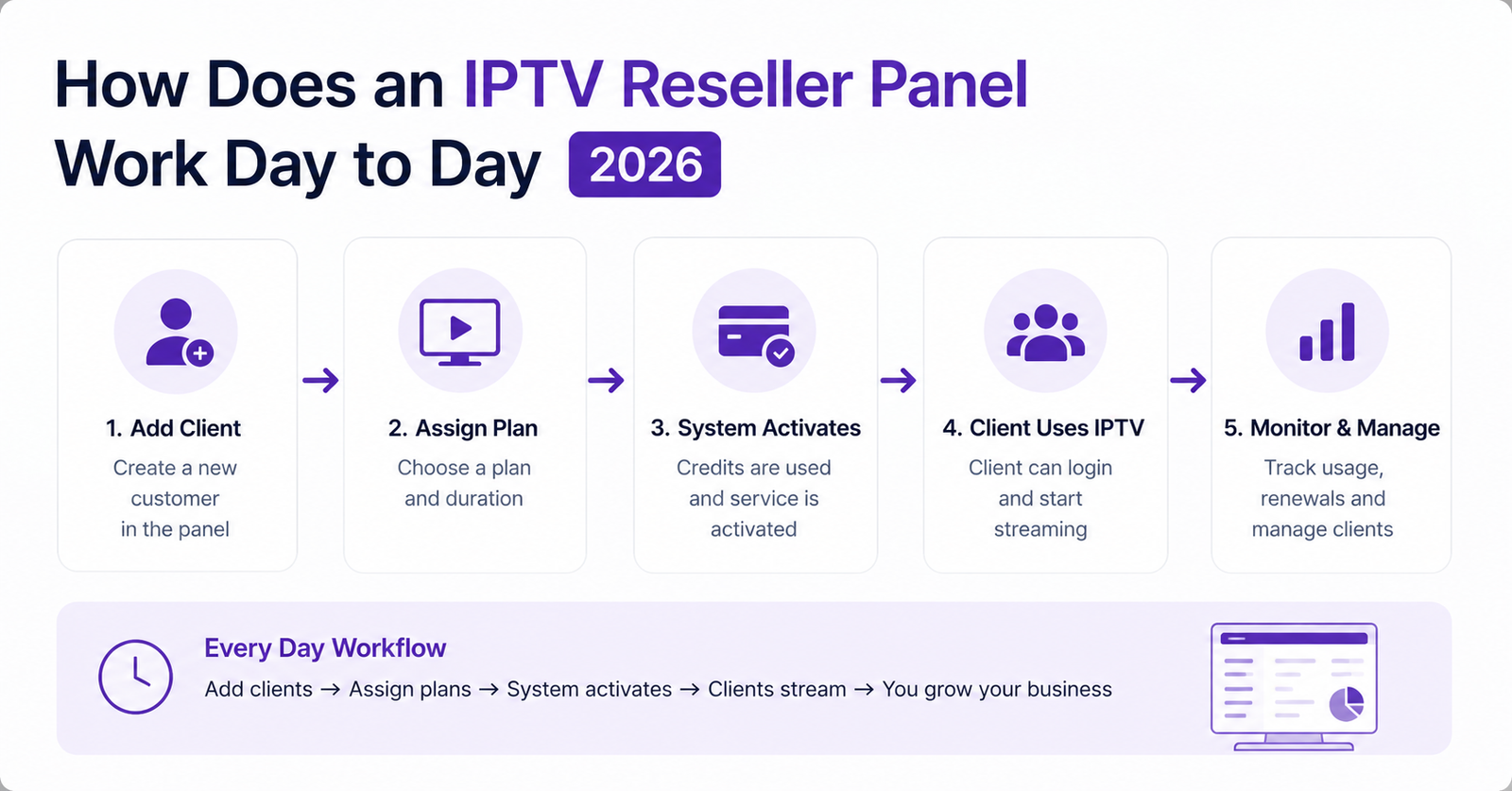
IPTV reseller panel work comes down to three repeating actions: spending credits to create accounts, tracking which ones are about to expire, and renewing them before a customer notices a gap. Everything else in a reseller dashboard exists to support that cycle. If you’ve never used one, it can look more complicated than it is from the outside, mostly because sellers describe their panel in vague terms like “manage your business” without explaining what actually happens when you log in.
What IPTV Reseller Panel Work Actually Looks Like
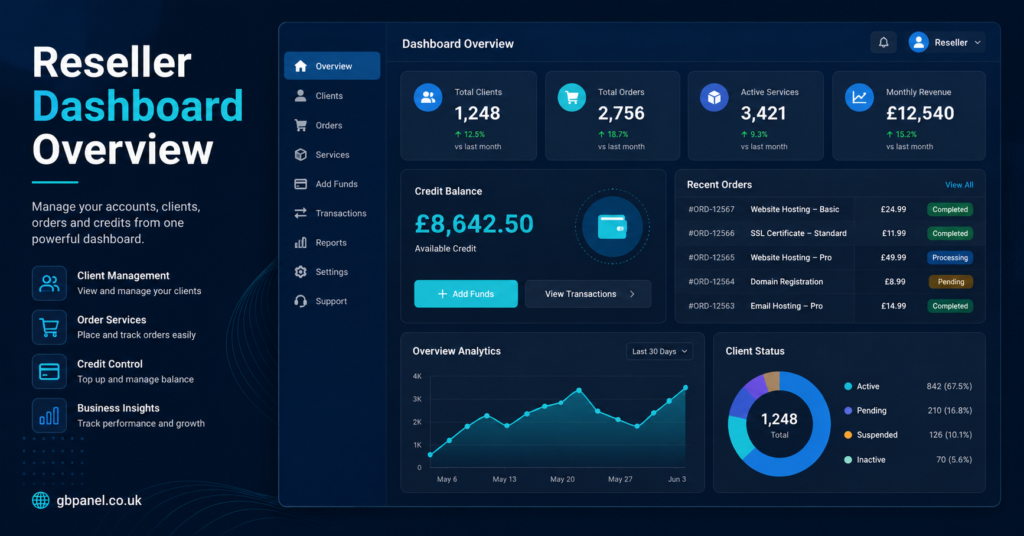
A reseller panel is administrative software, not a streaming service in itself. You log in, you see a credit balance, and you see a list of customer accounts with a status attached to each one, usually active, expiring soon, or expired. Creating a new account takes a handful of clicks: pick a package length, assign it to the customer, and the panel deducts the relevant number of credits from your balance. There’s no manual paperwork involved, and there shouldn’t be. The whole point of the software is to remove the spreadsheet-and-WhatsApp approach that a lot of resellers start out with before they realise it doesn’t scale past a dozen or so customers.
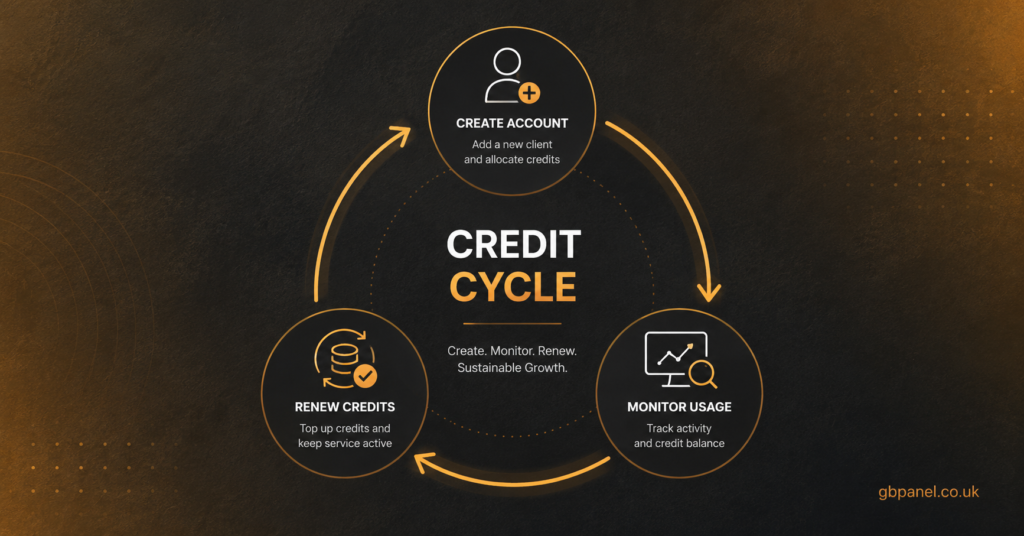
Renewals work the same way in reverse. Rather than you having to remember which customer signed up on which date, the panel tracks expiry automatically and surfaces it somewhere visible, often a filtered list or a colour-coded flag. You click renew, credits come off your balance again, and the customer’s access continues without interruption. That loop, create, monitor, renew, is what most people mean when they talk about reseller panel work, even if they’ve never put it in those terms.
The Credit System Sits Underneath Everything
Credits are the currency of the whole operation. You buy a block of them upfront from your supplier, and every account action you take spends from that block rather than from your bank balance directly. This matters because it changes how you think about pricing your own customers. If a month’s access costs you a certain number of credits, your retail price needs to cover that cost plus your margin, plus a bit of headroom for accounts that lapse or customers who ask for a refund.
Different panels handle credit expiry differently. Some credit packages carry their own validity window separate from how long a customer’s account lasts, which catches new resellers out if they don’t read the terms before buying. It’s worth checking this specifically before committing to a package rather than assuming it works the way your last supplier’s did.
Pro tip: Before buying your first credit package, ask directly whether unused credits expire and, if so, after how long. Suppliers who answer this clearly without hedging are usually the ones worth dealing with.
Where Resellers Actually Lose Time
Most of the friction in reseller work doesn’t come from the panel software itself, it comes from what happens around it. A customer messages asking why their access stopped, and the reseller has to go and check whether the account expired, whether a payment was missed, or whether something else went wrong on the technical side. Without a dashboard that flags expiry in advance, that conversation happens after the fact, which is a worse position to be in than catching it three days early.
The second common time sink is managing multiple customers through personal messaging apps rather than a structured system. It works for the first ten accounts. Past that, resellers start losing track of who’s paid, who’s due, and who cancelled two months ago but is still technically active in someone’s memory. A properly built panel keeps that information visible on one screen instead of scattered across chat threads.
Sub-Reseller Access Changes the Responsibility Chain
Some panels let you extend limited management access to sub-resellers underneath you, effectively letting someone else create and manage accounts within a portion of your credit allocation. This can genuinely help an operation scale, but it also means you’re now responsible for someone else’s account management decisions, not just your own. If a sub-reseller mishandles a customer or misuses their access, that reflects back on you as the parent account.
Anyone considering sub-reseller arrangements should be clear on where permissions stop. Can a sub-reseller see your full credit balance, or only their allocated portion? Can they create accounts without your approval, or does everything route through you first? These aren’t questions with a single correct answer, they depend on how much control you’re willing to give up in exchange for the extra selling capacity.
Signs a Panel Is Actually Built for Reselling
Not every dashboard sold as a “IPTV reseller panel” is built with reseller workflows in mind. Some are stripped-down customer portals with a different label attached. A few practical things to check before signing up:
Below is a quick comparison of what genuinely reseller-focused software tends to offer against a basic portal doing the minimum.
| What to Check | Why It Matters for Reseller Panel Work |
|---|---|
| Visible expiry tracking | Without it, renewals become reactive rather than planned |
| Clear credit balance on every screen | Stops you creating accounts you can’t actually cover |
| Activity log per account | Useful for compliance and for settling disputes with customers |
| Stated terms before purchase | Avoids surprise expiry rules or hidden fees after you’ve bought in |
Pro tip: Ask a prospective supplier to show you the account list view before you buy, not just the pricing page. It tells you more about how the day-to-day work will actually feel.
Pro tip: Keep a small credit buffer rather than running your balance to zero. A single unexpected renewal spike shouldn’t leave you unable to serve an existing customer.
IPTV Reseller Panel Questions from New Resellers
Do I need technical skills to use a reseller panel?
No. The dashboard is designed around clicking through account creation, renewal and status checks. You don’t need to understand the underlying streaming infrastructure to operate it day to day.
How much time does reseller panel work actually take once it’s running?
For a small customer base, most days involve a handful of renewals and the occasional new account, often manageable in under half an hour once you’re familiar with the layout.
What happens if I run out of credits mid-month?
You won’t be able to create or renew accounts until you top up. This is why many resellers keep a small buffer rather than buying the exact number they expect to use.
Can I change my retail pricing at any time?
Yes, in most credit-based models the panel supplier doesn’t set what you charge your own customers. That pricing decision, and any changes to it, stays with you.
Is sub-reseller access something every reseller needs?
No, it’s only relevant once your customer base has grown enough that delegating some account management genuinely saves you time. Smaller operations rarely need it.
Reseller Panel Work Comes Down to a Repeatable Cycle
IPTV reseller panel work isn’t complicated once you’ve seen the cycle a few times: spend credits to create an account, watch for the expiry flag, renew before it lapses, and keep your credit balance topped up enough to cover what’s coming. The panels that make this genuinely easier are the ones that surface expiry clearly, show your balance without you having to calculate it, and leave your retail pricing entirely in your hands. If you’re evaluating an IPTV reseller panel built for UK operators, it’s worth asking to see the account list view and checking the credit package terms before committing to a tier, since that’s where most of the day-to-day experience actually lives.
Reseller Checklist
- Confirm whether unused credits expire, and after how long
- Check that expiry and renewal status is visible without extra clicks
- Ask to see the account list layout before buying a package
- Clarify what sub-reseller access does and doesn’t allow, if relevant
- Keep a credit buffer rather than running your balance to zero
- Read the package terms fully before your first purchase