
IPTV Reseller Credits Explained simply, a credit is the unit a reseller spends from their dashboard balance every time they create or renew a customer account, rather than paying a recurring monthly bill for each subscriber. If you’ve bought a credit package and you’re not entirely sure how the deduction actually works day to day, or why some resellers seem to run out faster than others, that’s what this article sorts out.
How the Credit Balance Actually Moves
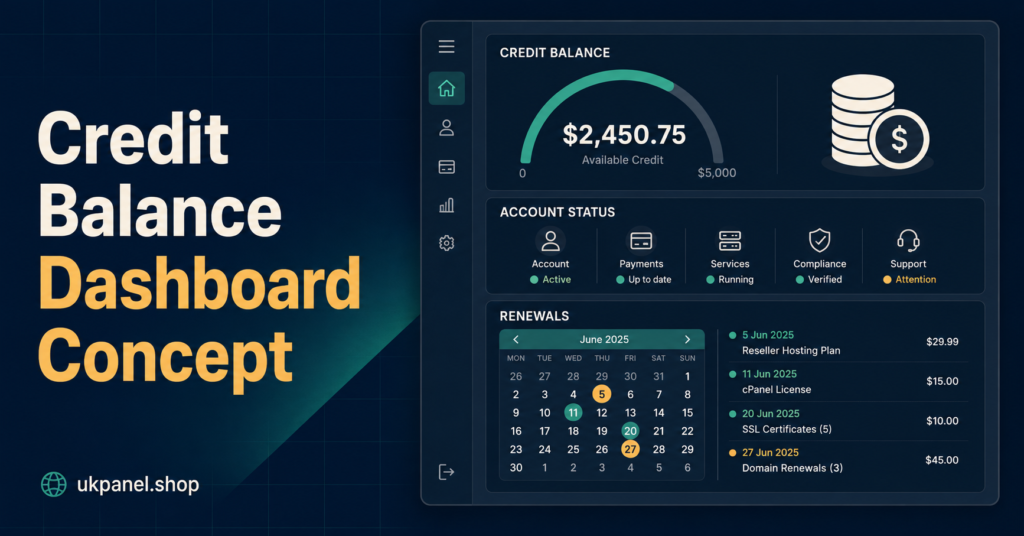
A credit isn’t a currency in the traditional sense. It’s closer to a token that gets consumed the moment you perform a specific action inside the IPTV Panel reseller dashboard, usually creating a new customer account or renewing one that’s about to lapse. The balance sits visibly on your dashboard, and it drops by a set amount each time you use it. Nothing is deducted for logging in, checking account status, or browsing your customer list. The deduction only happens on the action itself.
This matters because it changes how you should think about your stock. A credit package isn’t “£65 worth of IPTV” in the way a monthly subscription bundle might be. It’s closer to buying a set number of tickets that get punched one at a time, for as long as your reseller agreement allows. How far that stock stretches depends entirely on how many customers you’re actively managing and how often those customers renew.
Why Providers Use Credits Instead of Monthly Invoicing
Monthly invoicing between a provider and dozens or hundreds of individual resellers becomes an administrative headache fairly quickly, particularly when account volumes shift week to week. Credits solve that by moving the billing relationship to a single upfront purchase, then leaving usage entirely in the reseller’s hands. The provider gets predictable revenue in blocks. The reseller gets a balance they control without waiting on invoices or chasing renewal dates through email.
It also shifts risk in a specific direction. Once you’ve bought the credits, that’s the transaction. What you do with them, how you price your own customer accounts, and how quickly you burn through the balance, is your business to manage. That’s a fair trade for most resellers, but it does mean nobody is going to warn you if you’re spending credits inefficiently. That’s on you to track.
What One Credit Typically Covers
The exact value behind a single credit varies by provider and package tier, so treat any specific figure as an example rather than a fixed rule across the whole industry. Broadly, one credit corresponds to one month of access on one customer account, whether that’s a brand new activation or a renewal of an existing one. Some providers price premium account tiers at a higher credit cost per month, since those accounts typically carry heavier server or feature demands.
The table below shows how GB Panel’s UK reseller tiers translate credits into a usable working stock, which gives a reasonably typical picture of how the packages scale.
Pro tip: Before buying a package, count your active accounts and multiply by your average renewal frequency. That number, not the price per credit, tells you which tier actually fits.

Where Resellers Lose Track of Their Balance
The most common mistake isn’t overspending on customers, it’s underestimating renewals. New IPTV Panel resellers tend to budget credits for the accounts they’re actively selling, then forget that every one of those accounts will need renewing again in a month, using another credit each time. A batch of thirty new activations this month is thirty renewal deductions next month, on top of whatever new business you bring in.
A second, quieter problem is holding onto expired or abandoned accounts instead of clearing them out. They don’t cost credits while sitting inactive, but they clutter the dashboard and make it harder to see which customers are actually worth prioritising for renewal outreach. Keeping the account list genuinely current, rather than just technically accurate, saves time when you’re deciding where to focus.
The third mistake is buying a large package purely because the per-credit price looks better in bulk, without having the customer volume to use it within a sensible timeframe. If credit validity is tied to an expiry window, a big discount is worthless if a chunk of the balance lapses unused.
Sub-Reseller Credit Arrangements
At higher tiers, some panels let you extend limited account management access to a sub-reseller, effectively letting someone else create and renew accounts using credits drawn from your own balance. This can be a genuine growth tool, but it introduces a dependency that’s worth thinking through before setting it up.
The sub-reseller typically has no separate credit pool of their own, which means every account they activate is coming straight out of your stock. If you haven’t agreed clear limits or reporting expectations with them, you can end up discovering a much lower balance than you expected without an obvious explanation. Setting a review rhythm, even a rough weekly check of what’s been created under sub-reseller access, avoids that surprise.
Pro tip: Ask any sub-reseller to log a short note against each account they create. It costs nothing and saves considerable guesswork later when balances don’t add up cleanly.
Choosing a Package Without Overcommitting
Working out the right tier comes down to a fairly simple calculation rather than guesswork. Take your current number of active or expected customers, add a reasonable estimate for growth over the next two or three months, and multiply by however many renewal cycles will fall within that window. That gives you a working credit requirement you can compare against package sizes rather than picking based on price alone.
It’s also worth checking, before you commit, whether unused credits carry any expiry condition. A generous bulk package that expires before you can realistically use it isn’t generous at all. Providers vary on this, so this is a case where reading the specific terms attached to the package you’re buying matters more than general assumptions about how credits usually behave.
Reseller Checklist Before Buying Credits
- Count active accounts and expected renewals for the next two to three months
- Check whether the package’s credits carry an expiry window
- Confirm the credit cost for any premium account tiers you plan to sell
- Decide whether sub-reseller access is needed, and agree reporting expectations upfront
- Clear inactive or abandoned accounts from the dashboard regularly
- Compare per-credit cost against your actual monthly usage, not the headline package price
Frequently Asked Questions
Does a credit get used up if a customer cancels early?
No. The credit is spent at the point of activation or renewal, not refunded or clawed back if the customer stops using the account partway through the period it covers.
Can unused credits be moved between reseller accounts?
This depends entirely on the provider’s terms. Most panels tie a credit balance to the single reseller account it was purchased under, so check this before assuming credits are transferable.
Do premium IPTV accounts always cost more than one credit?
Not universally, but many providers do price higher-demand account tiers at a higher credit cost per month. The dashboard or package terms should state this clearly for each tier available.
Is it better to buy credits little and often, or in one large batch?
It depends on your renewal predictability. Resellers with steady, well-established customer bases often benefit from bulk buying at a better per-credit rate. Newer resellers with less certain volume are usually better off buying smaller amounts more frequently until their patterns settle.
What happens if I run out of credits mid-renewal cycle?
Any account due for renewal simply can’t be renewed until you top up, which typically means that customer’s access lapses. Most dashboards flag low balances in advance specifically to avoid this happening unexpectedly.
Conclusion
IPTV Reseller Panel Credits Explained at its simplest: a credit is spent every time you create or renew a customer account, and the real skill in managing them is forecasting renewals accurately rather than just tracking new sales. Resellers who run into trouble usually aren’t buying too few credits, they’re underestimating how quickly a growing customer base consumes a balance through renewals alone.
Before your next top-up, run the actual numbers on your active accounts rather than guessing, and check the expiry terms on whatever package you’re considering. If you want to see how the credit tiers and dashboard controls fit together in practice, GB Panel’s reseller packages lay out the current tiers, and the GB Panel dashboard overview covers how account creation and renewal tracking work day to day.